Wednesday, April 16, 2014

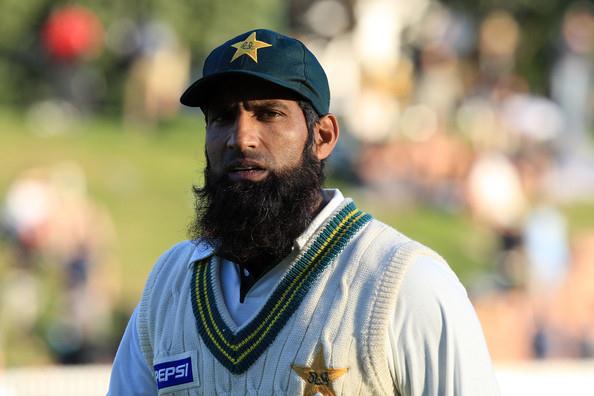
Mohammad Yousuf

Mohammad Yousuf biograohy 

source link (google.com)

Mohammad Yousuf (Punjabi, Urdu: محمد یوسف ‎; formerly Yousuf Youhana, یوسف یوحنا; born 27 August 1974) is a Pakistani right-handed batsman. Prior to his conversion to Islam in 2005, Yousuf was one of only a few Christians to play for the Pakistan cricket team.

Yousuf was effectively banned from playing international cricket for Pakistan, for an indefinite period by the Pakistan Cricket Board on 10 March 2010, following an inquiry into the team's defeat during the tour of Australia.[1] An official statement was released by the Pakistan Cricket Board, saying that he would not be selected again on the grounds of inciting infighting within the team.[1]

On 29 March 2010, Yousuf announced his retirement from all forms of international cricket,[2] a direct reaction to the indefinite ban handed out to him by PCB. However following Pakistan's disastrous first Test against England in July/August 2010, PCB decided to ask Yousuf to come out of retirement.[3]

Until his conversion to Islam in 2005, Yousuf was the fourth Christian (and fifth non-Muslim overall) to play for the Pakistan cricket team, following in the footsteps of Wallis Mathias, Antao D'Souza and the Anglo-Pakistani Duncan Sharpe.[7] He also has the distinction of being the first and so far only non-Muslim to captain the country, leading the team in the 2004–05 tour of Australia where he scored a century in the Boxing Day Test at the Melbourne Cricket Ground. He converted to Islam after attending regular preaching sessions of the Tablighi Jamaat, Pakistan's largest non-political religious grouping, whose preachers include Yousuf's former team-mate Saeed Anwar and his brother. His wife Tania converted along with him and adopted the Islamic name Fatima. However, the news was kept private for three years due to family reasons, before his announcement of their conversion publicly in September 2005.[8][9] "I don't want to give Yousuf my name after what he has done", his mother was quoted as saying by the Daily Times newspaper. "We came to know about his decision when he offered Friday prayers at a local mosque. It was a shock", his mother was reported as saying. However, Yousuf told the BBC that "I cannot tell you what a great feeling it is."[10] As part of his conversion, Yousuf officially changed his name from Yousuf Youhana to Mohammad Yousuf.

Former Pakistan cricketer and sports commentator Rameez Raja, who himself is Muslim, acknowledged the significance of Yousuf's new faith: "Religion has played an integral part in his growth not just as a cricketer but as a person."[11]

He made his Test debut against South Africa at Durban and One Day International debut against Zimbabwe at Harare. He has scored over 9,000 One Day International runs at an average above 40 (2nd highest batting average among Pakistani batsmen after Zaheer Abbas) and over 7,000 Test runs at an average above 50 (highest batting average amongst all Pakistani batsmen) with 24 Test centuries. He has the record of scoring the most runs without being dismissed in the One Day International match, with a total of 405 runs against Zimbabwe in Zimbabwe in 2002–2003. He has also scored a 23-ball fifty and a 68-ball hundred in One Day International. In Test match, he has scored a 27-ball fifty, which is 3rd fastest by any player. He was the top scorer during the successive years of 2002 and 2003 in the world in One Day International match. In 2004, he scored 111 runs against the Australians in the Boxing Day Test. In December 2005, he scored 223 runs against England at Lahore, also earning him the man of the match award. Seven months later in July 2006, when Pakistan toured England, he scored 202 runs and 48 in the first Test, again earning himself the man of the match award. He followed up with 192 in the third Test at Headingley and 128 in the final Test at The Oval.

Yousuf was named CNN-IBN's Cricketer of the Year for 2006, ahead of the likes of Australian captain Ricky Ponting, West Indies Brian Lara, Australian spinner Shane Warne, South Africa's bowling spearhead Makhaya Ntini and Sri Lanka's Muttiah Muralitharan. He was selected as a Wisden Cricketer of the Year in the 2007 edition.[12] Yousuf became the fourth recipient of the ICC 'Test Cricketer of the Year' award for 2007, he scored 944 runs at an average of 94.40 including seven centuries and two fifties in just 10 innings and that was enough to be awarded the honour ahead of English batsman Kevin Pietersen and Australian batsman Ricky Ponting.[13]

A year that started on a promising note, Yousuf carried it forward to break two world records both held earlier by former West Indian batsman Viv Richards. The 32-year-old, Pakistani batsman achieved an unparalleled 1788 runs in just 10 Test matches with the help of twelve centuries which became his second world record. Yousuf is known for his ability to score runs at exceptional rate through his great technique and composed strokeplay. Although capable of hitting the ball hard, Yousuf is quick between the wickets, although he is prone to being run out.[7]

Yousuf is a skilful infielder, with a report prepared by Cricinfo in late 2005 showing that since the 1999 Cricket World Cup, he had effected the seventh highest number of run-outs in ODI cricket of any fieldsman.[14] He is also distinguished by his characteristic celebration after hitting one hundred runs for his country, where he prostrates in thankfulness to Allah in the direction of Mecca. He has observed this act (known as the Sajdah) since his conversion to Islam.[15]

In 2007, after initially signing a contract to join the Indian Cricket League, Yousuf later refused due to pressure from the Pakistan Cricket Board as he would later face a ban by the board. In return the PCB promised to get him into the Indian premier league, however, no team bid for him as he faced litigation from the ICL.[16]

In 2008, he once again threatened to join the ICL after the PCB dropped him from their squad. A PCB official was quoted as saying, "We have banned all our cricketers who joined the ICL and if Yousuf also plays for the unauthorised league then he will have to face the same punishment. Yousuf is still our best Test batsman and has a future with the Pakistan team, but not if he joins the ICL."[17] Yousuf decided to join the ICL again to play mid-way though the second season.[18] The Pakistan Cricket Board reacted to the news by banning him from the national team.[19] Yousaf's chances to return to Pakistani cricket improved on 2 February 2009 when a Pakistani court suspended the ban on ICL players.[20]

On 29 March 2010, Yousuf announced his retirement from all forms of international cricket,[2] just days after the Pakistan Cricket Board imposed an indefinite ban on him. "I received a letter from the PCB that my staying in the team is harmful for the team, so I announce my retirement from international cricket", he said at a press conference in Karachi.[2] On 27 March, Yousuf said that he had decided to retire from international cricket.[26] "Yes, I have decided to retire as Pakistan player and my decision is not an emotional one", Yousuf told press agency AFP, "It's of no use playing if my playing is harmful to the team".[26] He was handed over an indefinite ban by the Pakistan Cricket Board for his disciplinary problems on Pakistan's tour of Australia 2009–2010.

On 1 August 2010, after Pakistan lost the first Test match against England at Trent Bridge, Nottingham, Yousuf was called back in the squad for the rest of the series.[3] He decided not to play the second Test because of tiredness.[27] Shortly after the completion of the second test, Pakistani captain Salman Butt announced that he expected Yousuf to return for the third test.[28] The selectors decided to play Yousuf in a tour match against Worcestershire just before the third Test so that his form and fitness could be checked.[29] Yousuf's form check was positive, because on a day inflicted by rain he managed to score 40*.[30] Yousuf then scored 56 against England in the third Test before being caught and bowled by Graeme Swann; in the process Yousuf became Swann's 100 casualty in Test cricket;the day saw a much improved performance by Pakistan as they were eventually bowled out for 308.[31]

Mohammad Yousuf 

Mohammad Yousuf

Mohammad Yousuf

Mohammad Yousuf 

Mohammad Yousuf 
Mohammad Yousuf 

Mohammad Yousuf 

Mohammad Yousuf 

Mohammad Yousuf 

Mohammad Yousuf 

Mohammad Yousuf


Imran Farhat

Imran Farhat biography

source link(google.com)
Imran Farhat (Urdu: عمران فرحت‎, born 20 May 1982 ) is a Pakistani cricketer who has played over 30 Tests and One Day Internationals for Pakistan, opening the batting in most of his international innings.

Farhat made his senior debut aged 15 in a one-day match for Karachi City against Malaysia, together with three other players who went on to play Test cricket (Taufeeq Umar, Bazid Khan and Kamran Akmal). Three years later, in February 2001, Farhat made his One Day International debut, against New Zealand in Auckland, scoring 20 runs in a chase of 150 to win. After the tour of New Zealand, where Farhat played three Tests and three ODIs, he was sent back to domestic cricket before returning against Australia in the third Test of the 2002–03 series, where he made 30 and 22 in an innings defeat. However, he was retained for the home two-Test series against South Africa in 2003–04, where he scored 235 runs including a maiden Test century in a 1–0 series win, second behind fellow opener Taufeeq Umar.

A month later, Farhat played in an ODI-only series against New Zealand, which Pakistan won 5–0, and Farhat made three fifties along with his second international century, ending with 348 runs at a batting average of 69.60, once again the second-highest amount of runs – this time behind Yasir Hameed. The season was rounded off with another century, this time against India, where he made 101 to help Pakistan gain a 202-run first-innings lead and eventually won the match by nine wickets. However, Farhat tallied 81 runs in the other two matches, which Pakistan lost to lose the series 1–2.

Farhat was less impressive the following season, however, and in four Tests, two against Sri Lanka and two against Australia, he only passed fifty twice, ending the season with 199 runs at 24.87 before the selectors left him out for the third Test of the series with Australia. In September 2004, just before the 2004–2005 season, he had been dropped from the ODI side following the 2004 Champions Trophy, as he had failed to pass 40 with any of his last ten innings, and that included 38 not out against the non-Test nation of Kenya, 20 against ODI debutants Hong Kong and 24 against Bangladesh.

He continued to score heavily in the domestic competitions and a century in a practise game against the visiting Indian team was rewarded with a place in the squad to take on India in the Test series (2006). He returned to Test cricket in style, with an important half century in the deciding third Test at Karachi. He scored a brilliant unbeaten century in the final test against New Zealand in 2009. His brother Humayun Farhat has also played International cricket for Pakistan.

 A mediocre series at home to Sri Lanka and away to Australia saw him falter, especially with the emergence of the other left-handed opener, Salman Butt. When Pakistan included only one specialist opener in the squad for the series against England in 2005 - Butt - seemingly it confirmed that Farhat, temporarily, was out of national reckoning. But as an opener in Pakistan, you are never out of national reckoning and sure enough Farhat was back for the final Test against India, where he scored a fifty. That performance saw him on the plane to Sri Lanka and an average series. But with openers becoming as rare as dinosuars in Pakistan, he was retained for the summer tour to England, where he again produced some mixed results. Despite failures in the first two Tests, a broken finger and a spate of dropped catches, he came back to score a cavalier 91 in the final, fateful Oval Test. Runs against West Indies at home were followed by a barren patch in South Africa. A first away hundred followed by a patient half-century in the Napier Test of 2009 has set him up for a long sojourn in the Test side. His ODI career has however hit roadblocks since he was dropped after an indifferent run of scores in 2006

Imran Farhat

Imran Farhat

Imran Farhat

Imran Farhat

Imran Farhat

Imran Farhat

Imran Farhat

Imran Farhat

Imran Farhat

Imran Farhat


Imran Farhat


Waqar Younus

Waqar Younus biography

source link(google.com)

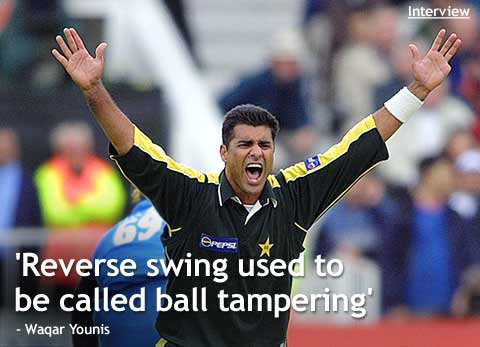
Waqar Younis Maitla (Punjabi: وقار یونس, born 16 November 1971) is a former Pakistani right-arm fast bowler in cricket and widely regarded as one of the greatest fast bowlers of all time.[4]

As of 2012, he holds the record for the youngest Pakistani Test captain and the third youngest Test captain in history (22 years 15 days).[5] He played 87 Tests and 262 One Day International (ODI) matches for Pakistan during his international cricket career from 1989 to 2003.[6]

Younis' trademark was his ability to reverse swing a cricket ball at high speed.[7] He took 373 Test wickets and 416 One Day International wickets during his career. Together with bowling partner Wasim Akram, he formed one of the world's most feared bowling attacks.[8] Younis has the best strike rate for any bowler with over 350 Test wickets.[9] He worked as a bowling coach with the national side from 2006 to 2007.[10] Waqar was appointed as the coach of the Pakistan cricket team on 3 March 2010.[11][12] He resigned as Pakistan's cricket coach on 19 August 2011 citing personal reasons.[13][14] He joined Sunrisers Hyderabad as their bowling coach for the Indian Premier League 2013 season.[15]

 Waqar began his cricket career in 1987/88 Pakistan, playing for several first-class cricket clubs. However he suffered an injury when he had cut and removed his little finger on his left hand,[18] after he had jumped into a canal. He recovered from this accident and went on to continue his sporting career. He was eventually discovered by former Pakistan captain, Imran Khan and was selected to be part of the national side.[2] He had played only six first class games when he got picked for the Pakistan camp out of the blue. Waqar says "I remember Imran was not feeling well at the time, and was not present at the camp. Luckily the Super Wills Cup was going on, and there was a match between United Bank and Delhi XI. Saleem Jaffar got injured, and I got the opportunity to play that game. Imran watched me on TV, and actually came to the ground to watch the end of the game. The very next day, he met me and told me that I will be going to Sharjah next month. Just meeting Imran at the time was enough of an experience for me, but for him to notify me of my selection was just out of this world."

 Waqar made his International cricket debut for Pakistan against India on 16 November 1989, in the same match that Indian batsman Sachin Tendulkar made his debut. Waqar took 4 wickets in the drawn match including the wickets of Tendulkar and Kapil Dev.[21] He made an immediate impression with his speed and became known in the cricket media as "Wiki"[22] or the "Burewala Express".[22] Waqar along with Wasim Akram opened the bowling attack regularly for Pakistan, becoming a feared and potent attack.[23] At his peak, he developed into a very quick fast bowler and also became famous for achieving a hat-trick in a One Day International match against New Zealand in 1994.[23] During the early periods of 2000, he stayed out of the Pakistan team for a brief period allegedly due to suspension and conflicts with bowling partner and captain Akram.[24][25]

In March 2006, he was appointed as the bowling coach for Pakistan.[30] He resigned from this position on 6 January 2007 in protest against the Pakistan Cricket Board decision to retain him only for the Test series against South Africa and not for the subsequent series of five One Day International matches.[31][32] He was re-appointed as Pakistan's bowling and fielding coach for their tour of Australia in December 2009.[33] In February 2010, Younis was appointed the head coach of Pakistan after Intikhab Alam was sacked as coach, owing to the low level of performances of the national side during the tour of Australia earlier that year.[34]

Waqar's first job as coach was to lead an inexperienced Pakistan side missing Younis Khan, Mohammad Yousuf and Shoaib Malik to the 2010 ICC World Twenty20 as a consolation, though Waqar had two top-notch bowlers in Mohammad Amir and Mohammad Asif at his disposal.[35][36] He guided the defending champions to the semi-final of the tournament before they were eliminated by Australia, whose Mike Hussey struck three sixes in the final over.[37]

The World Twenty20 was followed with the 2010 Asia Cup in which Pakistan lost to Sri Lanka by a narrow margin as Pakistan's top order collapsed and Shahid Afridi's 109 just failed to guide Pakistan to victory.[38] In the following match Pakistan lost narrowly against India courtesy of a six by Harbhajan Singh from the third ball of the final over.[39] The following match was a dead rubber between Pakistan and Bangladesh and another Afridi century meant Pakistan scored 385 runs and they comfortably won the match by 139 runs[40]

A tour of England followed, with two Twenty20's against Australia and two Test matches. Pakistan won both Twenty20's comfortably and the first Test saw Pakistan defeated by 154 runs. Pakistan rallied in the second Test and for the first time in 15 years Pakistan defeated Australia in a Test match. The previous victory in 1995 was also assisted by a superb bowling spell by Waqar Younis.[41]

Waqar Younus

Waqar Younus

Waqar Younus

Waqar Younus

Waqar Younus

Waqar Younus

Waqar Younus

Waqar Younus

Waqar Younus

Waqar Younus

Waqar Younus

Waseem Akram

Waseem Akram biography

source link (google.com)

Wasim Akram (Urdu: وسیم اکرم)(born June 3, 1966 in Lahore, Punjab) is a former Pakistani cricketer. He was a left-arm fast bowler and left-handed batsman, who represented the Pakistani cricket team in Tests and One-Day Internationals. He is widely regarded as one of the finest fast bowlers ever and holds world records for the most wickets taken in both ODIs (502) and List A cricket (881). Domestic career
Wasim signed for Lancashire in 1988 and went on to become one of their most successful overseas players. From 1988 to 1998, he spearheaded their attack in their NatWest Trophy, Benson & Hedges Cup and Sunday League winning sides. He was a favourite of the local fans who used to sing a song called "Wasim for England" at Lancashire's matches.
International career
Wasim made his Test debut for Pakistani cricket team against New Zealand in early 1985 and in only his second Test he made his presence felt with a ten-wicket haul. Like a few other Pakistani cricketers of his time, he was identified at club level and bypassed first-class domestic competition, entering international cricket directly. A few weeks prior to his selection into the Pakistani team, he was an unknown club cricketer who had failed to even make it to his college team. He was spotted by Javed Miandad, and as a result of his insisting was it that Wasim was given an oppurtunity to play for Pakistan. Later that season he paired with Imran, who became his mentor, at the World Championship of Cricket in Australia.
Wasim's rise in international cricket was rapid during the initial years. When Pakistan toured the West Indies in 1988, he looked to be the quickest bowler between the two sides. However, a serious groin injury impeded his career in the late 1980s. Following two surgeries, he re-emerged in 1990 as a bowler who focused more on swing and control than speed.
One-Day success
Wasim was instrumental in Pakistan's famous World Cup victory in 1992 in Australia. In the final against England his late flurry of an innings, 33 off 19 balls, pushed Pakistan to a respectable 249 for 6. Wasim then took the all-important wicket of Ian Botham early on, and when brought back into the attack later on, with the ball reverse swinging, he produced a devastating spell which led to Allan Lamb and Chris Lewis being clean-bowled in successive deliveries. His excellent performances earned him the Man of the Match award for the final.
He also captained Pakistan with some success. The high points of his captaincy were the 1996-97 victory in the World Series in Australia, two Test match wins in India in 1998-99 and in 1999, when Pakistan reached the World Cup final for the second time. The low point was the 1996 World Cup in Pakistan and India, when he had to pull out of the crucial quarter final match against India. After Pakistan's defeat, there were angry protests outside his homes, and a government inquiry was launched into the failure.
In 1999, he led Pakistan to the brink of victory in the World Cup before they rolled over and gave the final to Australia. This was the start of the match-fixing controversies, as people believed Wasim had set up the match for Australia. He was pardoned by Justice Qayyum.
He was Pakistan's top bowler in the 2003 World Cup taking 19 wickets in 7 matches. However, Pakistan failed to reach the "Super Six" phase of the tournament, and Wasim was one of the eight players to be sacked by the Pakistan Cricket Board as a result.
Wasim was diagnosed with diabetes at the peak of his career, but despite the initial psychological blow, he managed to regain his form and went on to produce fine cricketing displays. Since then he has actively sought to be involved in various awareness-raising campaigns for diabetes.
Playing style
“ Over my 15 or 16 years of playing international cricket in Tests and one-day internationals, Wasim Akram is definitely the most outstanding bowler I've ever faced. ”
— Former West Indies batsman Brian Lara.
An immensely talented player first discovered by Javed Miandad, Wasim played for his college(Govt. Islamia College Civil Lines, Lahore) as an opening bowler and batsman. As a bowler, Wasim possessed genuine pace, accurate control of line and length and seam position, and could swing the ball both in and out. With a very deceptive ball-concealing action, he could bowl equally well from both sides of the wicket. His mastery of reverse swing with the old ball meant he was at his most dangerous towards the end of an innings, and earned him the nickname Sultan of Swing.
As well as often being able to find the edge of the bat, Wasim would also focus his attack on the stumps and had a particularly lethal yorker. Of his 414 Test wickets, 193 were taken caught, 119 were taken LBW and 102 were bowled. In partnership with Waqar Younis, he intimidated international batsmen in the 1990s. Together Wasim and Waqar, known as "the two Ws" of the Pakistani team, were one of the most successful bowling partnerships ever.
Wasim was also skilled with the bat and was regarded as a bowling all-rounder. He was especially effective against spinners. However, he liked to slog and was criticised for his lack of big scores and giving away his wicket too cheaply for a player of his talent. He did silence his critics in October 1996 when he scored 257, not out, of the team's total of 553 against Zimbabwe at Sheikhupura. He also made good scores in difficult times for the Pakistan team such as his 123 against Australia and his 45 not-out to take Pakistan to victory in a low-scoring match. Pakistan, needing six runs in two balls two win the Nehru Cup saw Wasim come out to bat. The first ball he faced was hit out of the ground and secured the cup. Ahmed Bilal was his coach who gave him tricks on reverse swing.
Records
In his Test career, Wasim took 414 wickets in 104 matches, a Pakistani record, at an average of 23.62, and scored 2,898 runs, at an average of 22.64.
In One-Day Internationals, Wasim took a world record 502 wickets in 356 appearances, at an average of 23.52, and scored 3,717 runs, at an average of 16.52.
Wasim was the first bowler in international cricket to take more than 400 wickets in both forms of the game, and only Muttiah Muralitharan has since achieved this.
Wasim also held the record for the most wickets in Cricket World Cups — a total of 55 in 38 matches. Australia's Glenn McGrath broke the record during the 2007 World Cup, ending with a final tally of 71 from 39 matches. On passing Wasim's record, McGrath said, "Wasim Akram, to me, is one of the greatest bowlers of all time. Left-armer, swung it both ways with the new ball and he was so dangerous with the old ball. To go past him is something I will always remember. Probably the other side of the coin is that if you play long enough, you're going to break records here and there."
Uniquely, Wasim took four hat-tricks in international cricket, two each in Tests and ODIs. He is one of only three bowlers to have taken two Test hat-tricks (the others being Hugh Trumble and Jimmy Matthews), and also one of only three bowlers to have taken two ODI hat-tricks (the others being fellow Pakistani Saqlain Mushtaq and Chaminda Vaas of Sri Lanka). Wasim's Test hat-tricks are unique, since they were taken in consecutive Test matches in the same series, against Sri Lanka in 1999. Wasim is also one of only two bowlers to have taken both a Test and ODI hat-trick (the other being fellow Pakistani Mohammad Sami).
Playing in a Test against the West Indies at Lahore in 1990-91, he became one of only six players to have taken four wickets in an over during a Test match. In Wasim's case, the feat was not part of a hat-trick, the third ball of the series being a dropped catch, which allowed a single.
Wasim has also achieved the highest score by a number eight batsman in Test cricket — 257 not out from 363 balls against Zimbabwe at Sheikhupura. The innings contained 12 sixes which is also a world record for Test cricket.
He also has the joint-highest number of Man of the Match awards in Test cricket, along with South African Jacques Kallis, with 17.
Controversies
In 1992, after he had been successful against English batsmen, accusations of ball tampering began to appear in the English press, though no video evidence was ever found. Wasim and Waqar had been able to obtain prodigious amounts of movement from old balls. This phenomenon, termed reverse swing was relatively unknown in England at the time.
A far larger controversy was created when he was alleged to be involved in match fixing. An enquiry commission was set up by Pakistan Cricket Board headed by a Pakistan high court judge Malik Mohammed Qayyum. The judge wrote in his report that:
This commission feels that all is not well here and that Wasim Akram is not above board. He has not co-operated with this Commission. It is only by giving Wasim Akram the benefit of the doubt after Ata-ur-Rehman changed his testimony in suspicious circumstances that he has not been found guilty of match-fixing. He cannot be said to be above suspicion.
Retirement
Wasim retired in 2003, after a brief spell with Hampshire in England. Since then, Wasim has taken up commentary and can currently be seen as a sportscaster for the ESPN Star network, and is also running shows on ARY Digital.
He is married to Huma Mufti, daughter of Mr. Humayaun Mufti. Huma and Wasim have two sons from their marriage of thirteen years.

Waseem Akram

Waseem Akram

Waseem Akram

Waseem Akram

Waseem Akram

Waseem Akram

Waseem Akram

Waseem Akram

Waseem Akram

Waseem Akram

Waseem Akram


Shahid Afridi

Shahid Afridi biograpy 

source link (google.com)


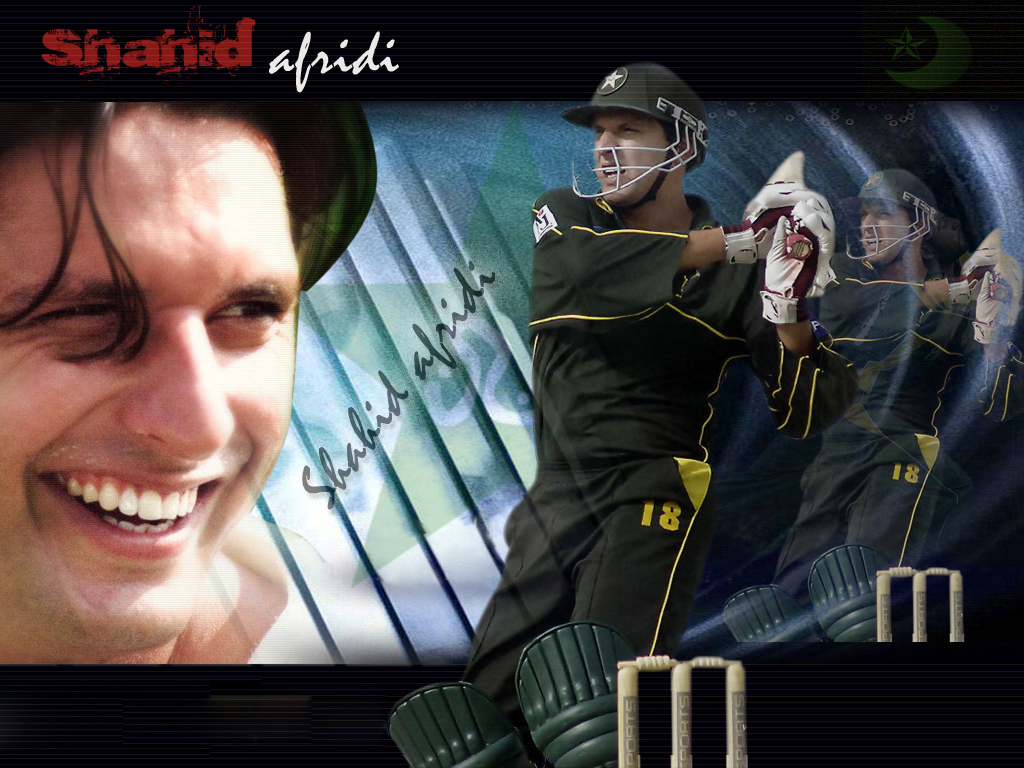
Shahid Afridi (Urdu: شاہدآفریدی‎), born Sahibzada Mohammad Shahid Khan Afridi also known as Boom Boom Afridi born on 1 March 1980)[2] is a Pakistani cricketer. Between 1996 and 2012, Afridi played 27 Tests, 350 One Day Internationals, and 59 Twenty20 Internationals (T20Is) for the Pakistani national team. He made his ODI debut on 2 October 1996 against Kenya and his Test debut on 22 October 1998 against Australia.

He is known for his aggressive batting style,[3] and previously held the record for the fastest ODI century i.e.in 37 deliveries,(Now broken by Corey Anderson who took one delivery less i.e.36 deliveries) which he made in his first international innings, as well as scoring 32 runs in a single over, the third highest scoring over ever in an ODI.[4] He also holds the distinction of having hit the most number of sixes in the history of ODI cricket.[5] Afridi considers himself a better bowler than batsman, and has taken 48 Test wickets and over 350 in ODIs. Currently Afridi is third on the list of leading wicket takers in the Twenty20 format, behind Saeed Ajmal and Umer Gul of Pakistan, taking 73 wickets from 70 matches.[6] Shahid Afridi has signed to play for Sydney Thunder in Australia’s Twenty20 Big Bash league.[7] In June 2009, Afridi took over the Twenty20 captaincy from Younus Khan, and was later appointed ODI captain for the 2010 Asia Cup. In his first match as ODI captain against Sri Lanka he scored a century however Pakistan still lost by 16 runs. He then also took over the Test captaincy but resigned after one match in charge citing lack of form and ability to play Test cricket; at the same time he announced his retirement from Tests. He retained the captaincy in limited-overs form of the game and led the team in the 2011 World Cup. In May 2011, having led Pakistan in 34 ODIs, Afridi was replaced as captain. Later that month he announced his conditional retirement from international cricket in protest against his treatment by the Pakistan Cricket Board (PCB). However, in October he reversed his decision. UNICEF and Pakistani authorities have taken Shahid Afridi on board for its anti-polio campaign in the tribal belt of lawless Waziristan region.[8]

In October 1996 at the age of sixteen Afridi was drafted into the ODI team during the four-nation Sameer Cup 1996–97 as a leg spinner as a replacement for the injured Mushtaq Ahmed.[10] He made his debut on 2 October against Kenya, however he didn't bat and went wicketless.[11] In the next match against Sri Lanka, Afridi batted at number three in the role of a pinch-hitter. In his first international innings, Afridi broke the record for fastest century in ODI cricket, reaching his hundred from 37 balls. The eleven sixes he struck also equalled the record for most in an ODI innings.[12][nb 1] Aged 16 years and 217 days, Afridi became the youngest player to score an ODI century.[14] Pakistan posted a total of 371, at the time the second-highest in ODIs, and won by 82 runs; Afridi was named man of the match.[12]In October 1996 at the age of sixteen Afridi was drafted into the ODI team during the four-nation Sameer Cup 1996–97 as a leg spinner as a replacement for the injured Mushtaq Ahmed.[10] He made his debut on 2 October against Kenya, however he didn't bat and went wicketless.[11] In the next match against Sri Lanka, Afridi batted at number three in the role of a pinch-hitter. In his first international innings, Afridi broke the record for fastest century in ODI cricket, reaching his hundred from 37 balls. The eleven sixes he struck also equalled the record for most in an ODI innings.[12][nb 1] Aged 16 years and 217 days, Afridi became the youngest player to score an ODI century.[14] Pakistan posted a total of 371, at the time the second-highest in ODIs, and won by 82 runs; Afridi was named man of the match.[12]n 2001, Afridi signed a contract to represent Leicestershire. In five first-class matches he scored 295 runs at an average of 42.14, including a highest score of 164,[20] and took 11 wickets at an average of 46.45;[21] Afridi also played 11 one day matches for the club, scoring 481 runs at an average of 40.08[22] and taking 18 wickets at 24.04.[23] His highest score of 95 came from 58 balls in a semi-final of the C&G Trophy to help Leicestershire beat Lancashire by seven wickets.[24] Derbyshire County Cricket Club signed Afridi to play for them in the first two months of the 2003 English cricket season.[25] In June 2004 Afridi signed with English county side Kent to play for them in three Twenty20 matches and one Totesport League match.[26]

Shortly after Pakistan won the 2009 ICC World Twenty20 the captain Younis Khan announced his retirement from Twenty20 cricket the Pakistan Cricket Board (PCB) subsequently announced that Shahid Afridi had taken over as captain in T20Is; the appointment was initially for one match, with a decision on the permanent replacement to be made later.[41] On 31 January 2010, Afridi was caught on camera biting into the ball towards the end of the 5th Commonwealth Bank ODI series in Australia.[42] Later Afridi pleaded guilty to ball tampering and he was banned from two Twenty20 internationals.[43]

In March 2010 the board announced that Shahid Afridi had been appointed ODI captain in place of the sacked Mohammad Yousuf he led Pakistan in the 2010 Asia Cup and during his first three matches as ODI captain he scored two centuries against Sri Lanka and Bangladesh he finished as the tournaments highest runscorer with 384 runs from 3 matches.

On 25 May 2010, Afridi was appointed captain of the national team in all three formats, after he announced his return to Test cricket.[44] In July 2010, Afridi captained Pakistan in the first Test of the series at Lord's against England. He scored 31 off 15 deliveries in the first innings and 2 in the second but was dismissed succumbing to rash strokes in both the innings. After the match, he announced retirement from Test cricket again citing lack of temperament for Test cricket as the reason.[45] Afridi was officially removed from the Test squad on the England tour, but after the spot-fixing scandal saw Mohammad Asif, Mohammad Amir and Test captain Salman Butt temporarily suspended by the International Cricket Council, he stated that he might return to Test cricket if "the team needs it".[46] According a representative of Afridi, he had voiced his concerns about Mazhar Majeed – who had approached Pakistan's players – in June.[47] Majeed also confirmed that he approached Afridi, Abdul Razzaq, Younis Khan and Saeed Ajmal but all off them refused to be affiliated with him of his fixing menace. Worth mentioning is that the four names given above were not associated in the original scandal and that no disciplinary action have been taken against them by the sports governing body the International Cricket Council.[48]

 Shahid Afridi

Shahid Afridi

Shahid Afridi

Shahid Afridi

Shahid Afridi

Shahid Afridi

Shahid Afridi

Shahid Afridi

Shahid Afridi

Shahid Afridi

Shahid Afridi